Friday, July 18, 2014

Six Sigma for Small Business - Book Review

One of the common complaints I hear about Six Sigma is that it is only for big businesses who can afford to invest in getting started. They hear stories about the cost to train a Green or Black Belt, and assume that it would not work in their own business because they are "too small."

I was intrigued by the book, "Six Sigma for Small Business" by Greg Brue (involved with GE's Six Sigma initiative). I was looking for ways to communicate with all businesses how Six Sigma concepts apply to everyone, not just Fortune 500 companies. If you've studied Six Sigma for any length of time, you'll hear all the reasons why it won't work in certain processes, businesses, organizations and industries. All of these reasons are completely false, and I often spend significant time trying to give examples of how it does apply to what they do.


Brue provides a list of common myths about Six Sigma, and his response to them:
  • Only applies to large companies
  • Only applies to manufacturing
  • Requires outside consultants and experts (Black Belts)
  • It is a complicated methodology that ordinary people do not understand
  • It overlooks customer requirements
  • It is a repackage of Total Quality Management (TQM)
  • It is an accounting game with no real savings
  • It is only about training
  • It is a "magic pill" to fix problems with no effort
Once companies are able to get past these myths, then they are willing to see the value it can provide.

There are a couple quotes about Six Sigma that can be used with small businesses, to help them understand why they need to implement a program.

Six Sigma is about "using science and an established set of steps that will give you the bottom-line results you and your employees want."

"Six Sigma is all about identifying and fixing problems that lower costs, improve quality, and raise your bottom line."

What company could argue with that logic? I would add that the customer wants and needs should also be included in these quotes, but I think it's a good way to summarize how Six Sigma can be beneficial to any business.

One reason small businesses NEED to have an improvement program is that they are competing with larger companies, and most likely are more expensive (due to scale and volume pricing). Therefore, small businesses cannot afford to have quality and customer satisfaction issues, whereas larger companies can afford more issues because they can still retain customers with lower prices.

He also provides an interesting Sigma level scale that relates to employee empowerment, that is another key benefit of an improvement initiative.


He also provides a table for different sized companies, showing who should fill certain key Six Sigma roles, and how many people based on your employee size. For example, a business with $3-7 million in revenue with 10-50 employees should have the following roles:

  • Champion: President/owner
  • Master Black Belts: Outside expert, or experienced Six Sigma employee
  • Black Belts: 2-3 employees 100% dedicated
  • Green Belts: 1-5 employees 20% dedicated
  • Project Team members: 6 member project team

Brue also gives some real-world examples of Six Sigma tools and ways to simplify them, such as:

  • Quality Function Deployment (QFD): It can be a complicated tool to use, so he provides a simplified template (provided in book) to help businesses clearly understand their customer needs, without making it too complex.
  • Gage Repeatability and Reproducibility (R&R): Checking the accuracy of grocery check-out lines to see if each cashier gets the same total
  • Correlation Analysis: Without calculating an actual correlation coefficient, you can use his technique for outlining the shape of the pattern on a scatter plot, and using the ratio of length and width to estimate correlation. The formula is provided in the book.
  • Design of Experiments (DOE): He provides a simple example of DOE using shower water temperature based on hot and cold knob settings.

There were a few tips that were provided that work well for small businesses:

  • Balance the amount of training and projects with the need for results. It doesn't have to be a full immersion, but letting projects drag out and not freeing up time to work on them will quickly kill your Six Sigma program. Do as much as you can afford to do, with the idea that you'll recoup that investment, since that is what you are doing, investing in your people.
  • To reduce training costs, piggyback your training with larger companies in your area. Many are willing to help the community, and if they have an internal course, there is no extra cost to them. They might also offer some of the experts to help your business get started. Local community or technical colleges offer less expensive training. There are many inexpensive online Green and Black Belt training courses to choose from. A last resort should be to build your own training material.
  • Use Excel add-in programs, such as Snap Sheets or SigmaXL, instead of starting with Minitab or another more expensive software. This might depend on your training curriculum and what package they use.

I was hoping for more tips and tricks specifically for small businesses, but I still feel this is an excellent book on Six Sigma. I would recommend it to anyone looking for a good comprehensive Six Sigma book for beginners, and especially for those working with or inside a small business.

Learn more about the 'Six Sigma for Small Business' book on Amazon >>>

Tuesday, July 15, 2014

Tips and tricks for more efficient and effective PFMEAs

Process Failure Modes and Effects Analysis (PFMEA) tables can be a powerful tool to identify potential failures in a process, and to prioritize which failures should be improved first. However, the effort required to complete a PFMEA can take many hours, which costs money. 

Based on our experiences with PFMEAs, here are a list of tips and tricks for making them more effective and efficient. We will break the information into three categories: Forms and Templates, Efficiency, and Effectiveness.

Forms and Templates
  • Break out the process control column from the detection control column. Sometimes they are contained in the same column, and the teams often focus too much on the detection and forget to talk about prevention activities in place. We would recommend having the columns in this order: Cause of failure mode, process controls, occurrence score, detection controls, then detection score.
  • Create a new column for Severity x Occurrence ranking, to identify internal rework cost issues (high impact and it happens frequently, regardless if we detect the failure in-house). Typically, teams rank risks by RPN only, but that is only assessing the risk of external customer escapes.
  • Consider adding another category for cause category, based on the fishbone diagram (Machines/tools/equipment, Methods/Processes, People/Personnel, Materials, Environment, etc). The PFMEA team can summarize the type of causes, and that information can be summarized and reported to identify systemic or higher level issues. If machines is the highest category, then the team should identify a project to look at machine preventative maintenance or equipment calibration updates.


Efficiency (complete PFMEA faster with fewer people)
  • "The more; the merrier" is not a good approach for conducting a PFMEA. Instead of having a larger team involved in the event just in case certain team members might be needed, invite only the core team, and have others as "experts on call". When the team runs into an issue, highlight the cell by color to identify who needs to answer the question. Then bring in each expert as needed, and review the questions for them all at once.
  • Before the PFMEA session begins, enter the failure mode and process steps into the form, so the team doesn't waste time watching the facilitator fill it out on the screen.
  • Don't let the team get hung up on one point differences in scores. Instead, consider flipping a coin, have someone make the tie-breaker decision, vote using majority rules with the team members, or always select the highest score (round up).
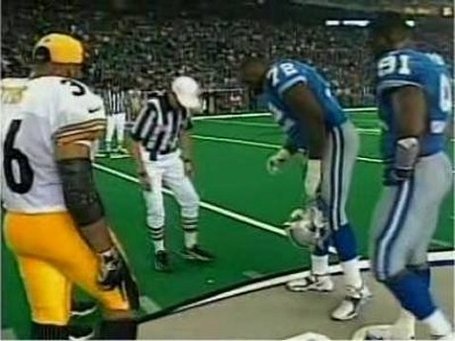
Speaking of failure modes, this coin flip controversy cost Pittsburgh the game. 
  • Before diving too deep into the exercise, scope the overall effort ahead of time. Consider evaluating Key Characteristics, Critical to Quality (CTQ) or Most Important Requirements (MIRs) only, instead of trying to assess every requirement. The idea is to start with the most important risks, so the biggest risks get identified as early as possible. Often times, the teams start to dwindle over time, so address the biggest issues when the momentum and excitement is highest.
  • Start with listing all the failure modes, then group the failure modes together and score them all. This helps align the team with the proper severity score. Next, list all the detection controls and detection scores (that align with the failure modes). Next, brainstorm the causes of the failure modes, then list the process controls and then score the occurrences (to help align the occurrence scores).
  • Keep sessions between 2-4 hours long. Over 4 hours can be tough for the team members to keep attention. Less than 2 hours is inefficient, since it takes some time to get setup and calibrated, and requires scheduling many more sessions, which increases the chance of people not attending.

  • To keep the team from digging deep into solutions during the scoring, add notes and ideas into the Improvement Actions column, so the team can move on to the next item.
  • Keep track of attendance and hours for each PFMEA session, so actual costs can be captured. There is often overestimates of PFMEA cost, so this data will help dispell myths. Ideally, your company will begin to create estimates for how must each PFMEA will cost based on size and magnitude of the effort.
Effectiveness (Identify more potential failures and causes, and make analysis more complete)
  • Bring in the physical product, forms, software (view on screen), etc that is being discussed, so the team can physically see the process. If possible, perform the PFMEA right in the process area, so observations and questions can be answered quickly by the right people.
  • Align the failure modes with defect categories in your quality system, and align your process steps with process step names in your business system or documentation.
  • Fill out as much detail as possible into each column, such as document and reference numbers. Often times, what was written down was a summary of the discussion, and teams struggle to remember what the statements mean when the read it days later, and it helps others not involved in the sessions to understand what was discussed.
We prefer this level of detail, not just "friction" or "excess weight"
  • After actions are implemented, in order to reduce occurrence scores, there must be a process control (training, fixture, mistake proof device, procedure change, etc) implemented. To reduce detection scores, there must be an inspection or test implemented.
  • Spend time calibrating the team on the scoring tables at the beginning of each PFMEA session (especially the first session). Don't speed through this process, or you will struggle to keep the team aligned.
  • Provide scoring handouts for each team member, or post the scoring on the wall. Allow extra time to go through the first couple lines slowly with the team.
  • A regular review of the PFMEA should be setup as a recurring meeting (suggest monthly or quarterly), to force the teams to get together and update the PFMEA.
  • Don't use a cut-off RPN score criteria for actions, instead work on the top risks only. Teams can be biased in their scoring when trying to stay below a value (such as 150 or 100) that require actions. Some processes may have many actions over that threshold, but the team cannot address all of them at once. However, AS 9100 requires that the criteria for how the team decides to take action should be defined on the PFMEA. We would recommend taking action on the top 5 RPNs, regardless of score.
  • Customize the PFMEA ranking tables to align with your business, to minimize scoring differences between teams. Especially if conducting a PFMEA in a service or transactional process, or an industry other than manufacturing (where PFMEAs were developed, and most scoring tables were designed for). 


For more information about PFMEAs, download our training material or FMEA Excel template

Sunday, June 29, 2014

Which lean book is better? Toyota Way or Toyota Kata

I saw a recent interview with author Jeffrey Liker about both of these books, and I think he does a great job summarizing what each book can be used for.

He explains that "The Toyota Way" provides companies with the "ideal state" vision. It explains how they should operate (similar to Toyota), and how to think differently about what is possible for their business. It is a powerful book about how Toyota operates.

The Toyota Way is the first book for a general audience that explains the management principles and business philosophy behind Toyota's worldwide reputation for quality and reliability.

However, for most companies, that is quite a stretch from where they are today. Many companies end up rejecting the entire idea based on many factors (not our industry, different business model, different constraints, "we're different," etc). The ideal state seems so far off, that it seems impossible for them, so they shut down and ignore the concepts completely.

In order to close the gap from current state to ideal state, Mike Rother wrote "Toyota Kata". Consider it to be "future state" for companies.

Drawing on six years of research into Toyota's employee-management routines, Toyota Kata examines and elucidates, for the first time, the company's organizational routines--called kata--that power its success with continuous improvement and adaptation.

With an emphasis on problem solving at the employee level, any company can implement these practices, and not feel overwhelmed.

So which book should you start with? Similar to many lean events we run, we need to understand where we are headed and why. I would recommend starting with "The Toyota Way" so companies can see the ideal state. Then, introduce "Toyota Kata," so they can see how to move from current to future state, while still keeping an eye on ideal state.

Watch the full Jeffrey Liker interview below:


What other lean books have you found useful to your company?

Saturday, June 21, 2014

"Six Sigma on a Budget" book review with simplified tools

One of the biggest issues with companies deploying Six Sigma is the upfront cost for training. For a company of 1000 employees, most consultants would recommend 10 Black Belts and 100 Green Belts. Although it can be an effective way to gain critical mass, the price tag can scare many companies away.

There are many ways to cost effectively implement Six Sigma, without all the upfront costs. In fact, we prefer a more targeted approach to process improvement, not a mass training that cannot possibly be supported or managed properly.

Based on these issues with Six Sigma deployment, I was intrigued by the book "Six Sigma on a Budget: Achieving More with Less Using the Principles of Six Sigma"


Despite the title, this book is not about how to deploy Six Sigma cost effectively. We utilize an approach where we identify a target area, focus on making that area successful, then roll out to the rest of the areas in a methodical manner. Please contact us for help with this approach.

Instead, the book focuses on how to use the Six Sigma tools more effectively, to increase utilization with employees and reduce training time. The author, Warren Brussee, went through Six Sigma training at GE, but felt there was a better way to train, without as much technical details, with an approach that provides a more effective use of the tools.

The book covers the basic concepts of Six Sigma, and says that you only need high school level math and Excel software to achieve Green Belt level skills from this book.

Brussee presents many different simplified versions of existing tools, to show how to easily utilize the concepts, without the complexity and effort.

Here are the tools he presents as "Simplified," along with a description on how it differs from the traditional application:

  • Quality Function Deployment (QFD)
    • Only uses the two comparisons between customer needs and design options (items). The design items are grouped to help determine priorities. Each customer need is ranked with a 1 to 5 scale (5 being safety or critical), and each design item is ranked with a 1 to 5 scale (5 being that it addresses the customer need completely). The design option that ranks the highest is the best approach for the team. This reminds me of a Cause and Effect Matrix.
  • Failure Mode and Effects Analysis (FMEA)
    • Only lists the concerns (risks) on the left side column, and lists the potential solutions across the top, using a similar scale as QFD.
  • Process Flow Diagrams (PFD)
    • Uses only a few symbols, and only displays four process types: assembly, transfer, measurements, quality judgments
  • Correlation Tests
    • Instead of running correlation statistical tests (generating a correlation coefficient), he suggests using visual charts to stack different factors on top of each other, using the same timeline on the x-axis. If you can visually see how variation aligns with other factors, then there might be a correlation. I've seen these simplified charts in Excel, called sparklines. Learn more about sparklines >>>
  • Gauge Verification
    • Suggests using "master" parts that are centered near the target (middle of the specifications), then having 3 different operators/machines measure the master part 7 times each. This will provide 21 measurements, of which repeatability and reproducibility can be calculated.
  • Control Charts
    • Uses a simpler chart to identify issues that is more intuitive and understandable to workers. Instead of plotting a single data point, a vertical bar is plotted showing the average of the last 11 readings, and the spread represents the variation of the 11 readings. The bars are colored coded based on whether they exceed control or tolerance limits.
  • Design of Experiments (DOE)
    • He discusses using a 2-level factorial DOE with 5 replicates (i.e. a 2 factor experiment would require 2^2 x 5 = 20 samples), and to compare the average and standard deviation results to each combination, to find the settings that have minimal variation, and that is closest to the nominal results.

Overall, I would recommend this book if you are looking for "simplified" ways to teach and utilize the tools listed above (QFD, FMEA, PFD, Gage R&R, SPC, DOE).

To order the book or read the first chapter, visit the Amazon page for "Six Sigma on a Budget" >>>

Monday, May 26, 2014

List of supplies for Lean Six Sigma Event Facilitators

If you are just getting started leading or facilitating lean or six sigma events, you need to be prepared with a list of kit supplies to have during the event.

Each event will have different objectives and require different supplies, but here is a list of items to consider (Note: Amazon affiliate links):

Write On - Cling On Reuseable Static Easel Pad - Better for the environment than paper easel pads, but if you want paper, at least use the recycled paper version, and you might need a easel pad stand.


Post-it Recycled Sticky Notes - A must have for any event. Select the recycled paper version.


Digital Stopwatch - If you are doing anything related to time, you need real measurements from the process, not data from a system. Timings also allow you to see the waste first hand.


Clipboard with calculator - Useful for taking notes, and doing quick math, such as takt time, yield, or DPMO.


"Butcher" paper roll - Good for taping to wall for process mapping with post-it notes


Recycled Perforated Note Pads - Good for taking notes during walk throughs, tours and process reviews


Colored pencils - Useful for showing multiple flows on spaghetti diagrams


Flip chart markers - Write on dry erase boards or easel pads


Name tents - These are reusable with dry erase markers, to save paper.


Other items that you will need, but should not require ordering online:
  • Scissors
  • Rulers
  • Tape (masking and scotch)
  • Pencils and pens
  • Digital camera - someone should have a smart phone that takes good pictures
  • Tape measure
  • Glue sticks
  • Sharpies (permanent markers) - bold enough so words are legible when posted on the wall
The following items are not required, but you might find them helpful:


Pedometer - Easy way to capture actual walking distance of people, instead of what it should be on paper


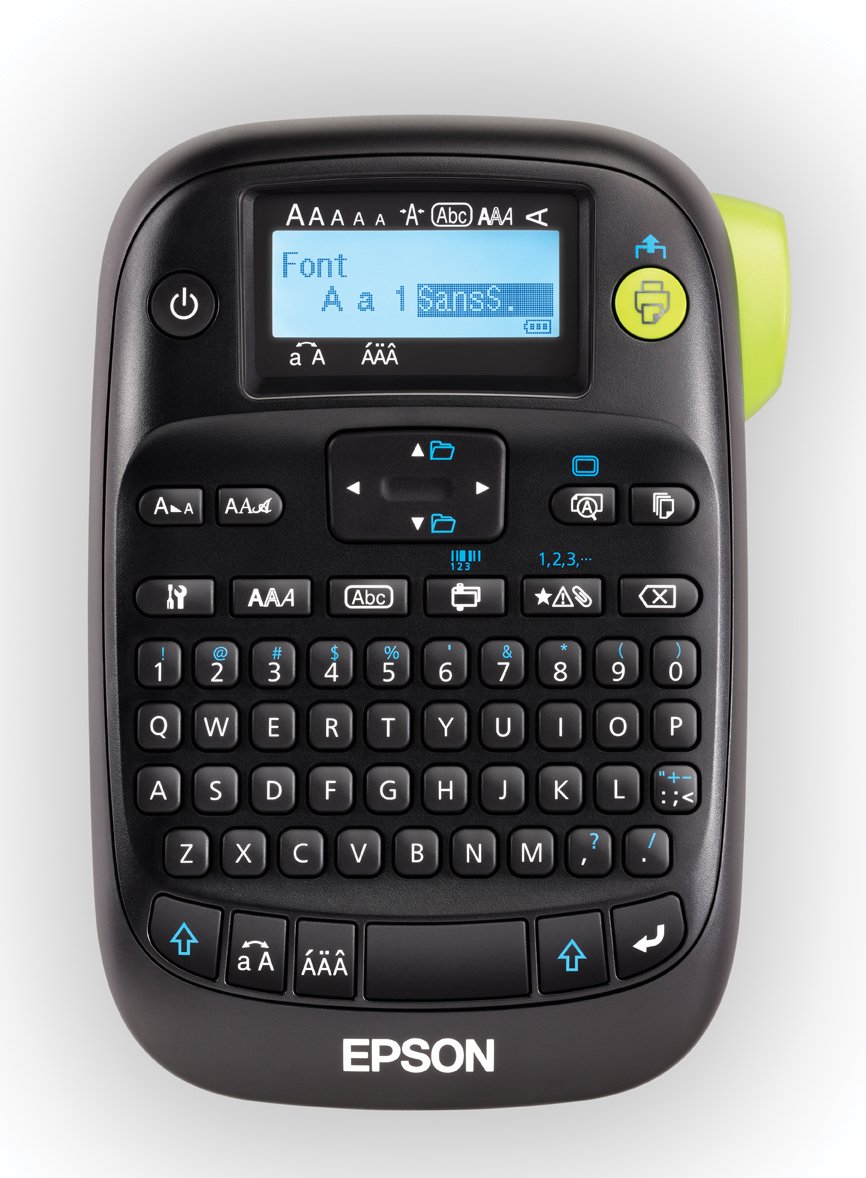
Label maker - For making signs and labels in work area


Laminator - For making signs to hang in work area or metric sheets that can be wiped clean each day


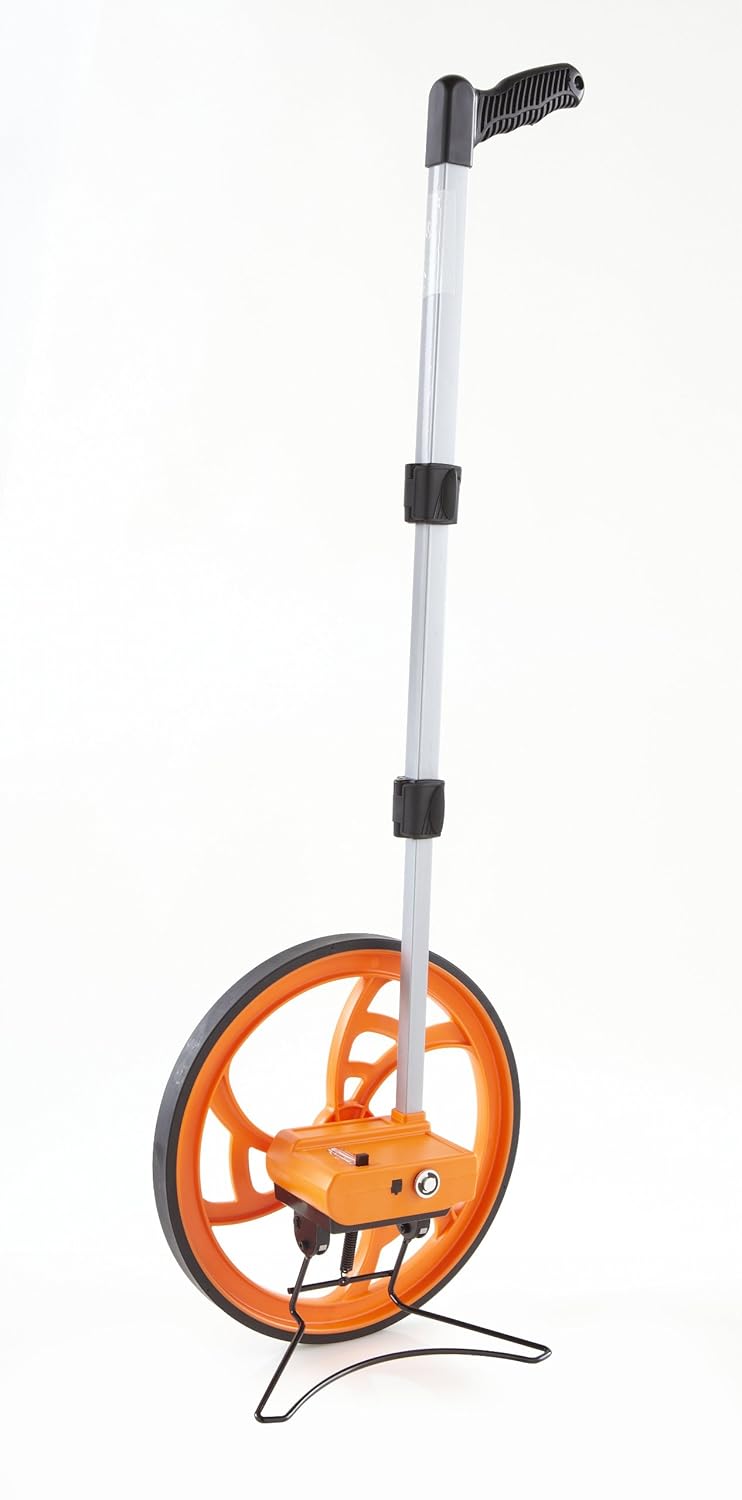
Measuring wheel - An easier way to calculate square footage and distance than a tape measure


These items above are generic for most events, not specific to a VSM or 5S event, which would require additional items, such as VSM data box sheets or 5S red tags.

Did we forget something important off the list? If so, leave a comment below...

Thursday, May 8, 2014

6 resources for Six Sigma Black Belts to save time and improve effectiveness

Sigma Black Belts and Master Black Belts often have too much on their plate, especially when there aren't many other Black Belts in your organization.

Here are some resources that you can use to be more efficient and effective, giving you more time to spend coaching and mentoring your Green and Black Belts.

  1. Project Tracking System - Free web-based DMAIC project tracking system, with email reminders for overdue milestones and actions, and upload required artifacts and documents with each phase. This will help you keep projects on track and increase the chance of success.
  2. Green Belt Exam Reminder System - Free reminders sent to Green and Black Belts planning to take the ASQ exam. The emails will provide tips, tricks, materials, and expected progress for key dates and milestones leading up to the ASQ exam, so you don't have to remember to stay in touch with your mentees and make sure they are staying on track.
  3. Lean Six Sigma News - Stay up to date on the latest Lean and Six Sigma trends, tips and tricks. Top blogs, articles, tweets and posts from the top experts and consultants across the web, all displayed on one webpage with no effort.
  4. Lean Six Sigma Skills Assessment - Use this assessment tool to provide your mentees with a way to evaluate their skills and experience on a 1-10 rating scale, based on four major categories: Lean, Six Sigma, DfSS and Soft Skills.
  5. Training Material Powerpoint Templates - Download powerpoint training templates to avoid wasting time creating training material from scratch. Simply add your company logo, review the slide notes, and you're ready to teach topics such as: DFSS, Control Charts, Capability Analysis, 5S, Lean Six Sigma, Cost of Poor Quality, and Root Cause Analysis.
  6. Facilitation Tools - Order items to help you facilitate lean events, such as resusable dry erase sheets, post-it notes, clipboards, VSM data box templates, and more.

Here are some new resources we are working on this year:

Training Reminder System - For each class you teach, setup a checklist to send email reminders as your training class progresses towards the date of the class. Tasks such as:

  • Check attendance list/sign ups (2 weeks prior)
  • Print training materials (1 week prior)
  • Send reminder email and attachments to attendees (2 days prior)
  • Send contact information to attendees (1 day after)
  • Send survey to attendees (2 days after)
UPDATE 7/5/14: The class reminder system is now up and running! Check it out at LeanSixSigmaProjects.com >>>
Cause and Effect Prioritization Matrix - Project hopper tool to prioritize projects based on customized criteria and ranking scores, to help determine the best Green and Black Belt projects to work on.

If you are interested in the new tools, sign up for our mailing list to get notified when they are released. If you have other resources you need to make your job easier or more effective, post your ideas below in the comments.

Saturday, May 3, 2014

15 last minute tips before taking an ASQ Green or Black Belt exam

You've been studying for the ASQ Green or Black Belt exam. You think you're ready, but you're nervous that you overlooked something, or will make a mistake that prevents you from getting certified. Here are some last minute tips to consider, to put your mind at ease. Many of these tips can be used for any exam, but we're targeting those taking an ASQ exam.

If the exam date is months away, or you're just considering the exam, we have provided some tips and reference material for those taking the Green Belt exam on our website at: http://biz-pi.com/certification.asp

If you've decided to take the exam, check out our newly launched "ASQ Six Sigma Exam Reminder System," which provides you with timely updates in your inbox leading up to the exam date. Learn more at: http://biz-pi.com/exam_reminders.asp

The exam is coming up soon. Am I overlooking or forgetting something?

Here are the last minute tips I tell people a couple days before the test.

1) Know your reference material
Don't forget your reference materials and books. You can bring as many items as you want, but if you bring more than 3 things, you have too many. Definitely bring your Primer booklet, however any sample questions and answers from the practice exam must be removed. For reference books (see list of recommended Green and Black Belt books), you should have post-it notes or colored flags to mark and label important sections (see image at left), so you don't waste time searching for the answers.

2) Bring the correct supplies
Bring at least two pencils with good erasers and plenty of lead, and a calculator you are familiar with that has newer batteries. You will be provided with scratch paper that you will need to turn in when you're done, so you don't need to bring paper.

3) Pace yourself
Bring a watch or cell phone, so that you can properly pace yourself, so you don't lose track of time. Here is the takt time for both tests, which is how much time you have to complete each test. You should check after every 30-60 minutes where you are at to make sure you are ahead of schedule.

Green Belt: 144 seconds per question (2:20)
  • 100-question, 4-hours
  • 240 minutes / 100 questions
  • 2.4 minutes per question, or 2:20 or 144 seconds
Black Belt: 96 seconds per question (1:36)
  • 150-question, 4-hours
  • 240 minutes / 150 questions
  • 1.6 minutes per question, or 1:36, or 96 seconds

So you need to be quicker than you were with the Green Belt exam, in addition to the tougher questions. If you don't know what takt time is, review the section on Lean. 

4) Stay positive
If you think you are going to pass, you will be more relaxed and more likely to succeed. Maintain a positive attitude even when you're struggling, and try to stay relaxed. If you start to feel nervous take a few deep breaths to relax, or stretch for a few seconds.

5) Start with the easy questions
Don't stay on a problem that you are stuck on, especially when time is a factor. Since it is multiple choice, if you run low on time, you can always guess at the hard ones. All questions are equally weighted, so the easy questions are worth the same as the hard ones. If you skip a question, put a star or mark it so you can quickly find it (both on the question booklet and the answer sheet).

6) Take your time 
Pace yourself, don't rush. Read the entire question and pay attention to exactly what they are asking for, which might not be what you read the first time. The exam will have questions that seem tricky or worded in a way that may be confusing. Don't skim it or make assumptions about what the question might be asking.

7) Focus on you
Don't worry if others finish before you. Focus on the test in front of you, and how you are doing. Use the full time allotted if possible, to increase your chance of getting the best score possible, as exams are ranked based on complexity/difficulty. Learn more at: http://asq.org/cert/faq/exam-grading-process-detailed

8) Inspect your work
If you have time left when you are finished, look over your test answers. Make sure that you have answered all the questions, since there is no penalty for guessing. Watch out for careless mistakes (misaligned answers with the question number, especially if you skip questions). Ensure that you fully fill in the ovals so you get proper credit, and fully erase answers you decide to change.
9) Eliminate poor answers
Since the exam is multiple-choice questions, the process of elimination can help you choose the correct answer. Start by crossing off the answers that couldn't be right. Then spend your time focusing on the possible correct choices before selecting your answer. I prefer to cross out the ones I eliminate, so it's more visual.

10) Breaks may be worth the time
Take a break during the test if you need it. A five minute break may seem costly, but it can refresh your mind, and help you break from a stressful situation. Even standing up and doing a quick stretch can be enough to get your mind back on track.
11) Get to bed early
This seems obvious, but many people try to get as much studying in the night before, and it can do more harm than good. Your brain and body need sleep to function well, so don't stay up late!  In fact, go to bed earlier than you normally do, as you may be nervous or have trouble falling asleep, so the extra time might come in handy. Cramming is not helpful for these exams, since memorization is not important.

12) Know your exam location
Do you know where the exam is taking place? If you have never been there before, go visit the location so you know how long it takes to get there. This includes finding the actual exam room, not just the building. The exam date is not the time to get lost or take the wrong road.
13) Eat a good breakfast
Don't skip breakfast the morning of the test. Hunger can cause distractions, and drain your energy. Consider bringing something to eat like power bars, candy, snacks and/or something to drink.
14) Arrive early
Get there early to allow for unforeseen problems (accidents, construction, car issues, etc) that can stress you out or make you late. This will also give you time to review your notes right before the test, so your brain is ready to go.

15) Set multiple alarms
The last thing you want is to oversleep and stress out getting there, or worse, arrive late and not have time to finish. Set multiple alarms, and have someone else make sure you are up by a certain time. This is a significant and important test, so take every precaution you can.
 Hope these tips are helpful to you. Did we forget some tips that you feel are important? If so, leave a comment below. Good luck!!