Does your company have a problem solving process, like PDCA or 8-D?
If so, do people use it? How do you know?
Simple, ask for documentation. If an employee or improvement team is really working on a problem, and they aren't writing down or documenting what you're doing, then how well are they following the process? If the process is "in their head" then it's either a really simple problem, or they're probably missing some steps.
Here are some simple questions you can ask people in your company, to see if they are following the process and structure, if they can't provide documentation to prove it.
What is the problem you are trying to solve?
Many teams cannot clearly articulate the problem, so they will struggle solving the problem if it is not well defined. This step can take a long time to complete, depending on the complexity of the problem. Teams often skip through this step quickly, so they can get to root cause right away and have some answers from management. Encourage them to take their time and make sure the problem statement is clear before moving on.
What step of the problem solving process are you in?
This will help you understand whether your employees are following the process or not, and help you understand how far along they are with this problem/issue. If they struggle answering the question, they may not be very knowledgeable about the process, or jumping around steps and working out of order.
What data did you use to determine the root cause?
This will help you understand how well the root cause was investigated. If little to no data was used, then the solution will have much less chance of being successful, so the odds that they are actually addressing the right cause is slim to none. I find that teams that give up on collecting data and skip ahead to solutions are also less likely to adhere to the problem solving process.
Is your solution addressing the long term?
Many solutions address the immediate need, or contain the problem in the short term only, but they do not complete the entire 8-step process to prevent the problem from recurring. This happens often because after containment is in place, management stops asking about the issue, so the teams get pulled into the next "fire" instead of completing the problem solving process on the issue. This will be evident when you ask about different problems they've worked on, but they can't explain what actions were taken to prevent the problem from coming back. If the problem hasn't recurred, but no improvements were made, then don't be surprised when it does come back as next month's "fire".
There are many other questions you can ask, but these will give you a pretty good indication.
Finally, don't just ask the quality organization about problem solving around product failures. These departments may have contractual reasons to follow the process, as it probably gets submitted to the customer. Instead, talk to your HR department, your shipping department, Invoicing department, and even your Lean/Six Sigma organization (yes, we don't even follow our own recommendations all the time for our own issues). Problem solving is a company-wide process that everyone should be using on their top problems.
If so, do people use it? How do you know?
Simple, ask for documentation. If an employee or improvement team is really working on a problem, and they aren't writing down or documenting what you're doing, then how well are they following the process? If the process is "in their head" then it's either a really simple problem, or they're probably missing some steps.
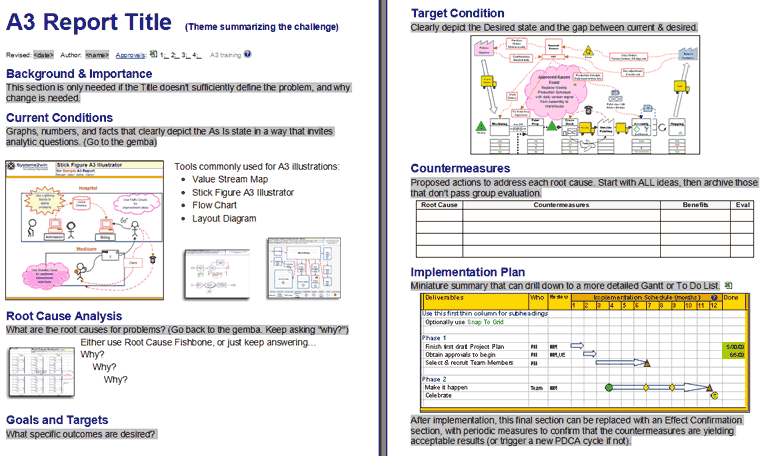 |
| Example A3 Report |
What is the problem you are trying to solve?
Many teams cannot clearly articulate the problem, so they will struggle solving the problem if it is not well defined. This step can take a long time to complete, depending on the complexity of the problem. Teams often skip through this step quickly, so they can get to root cause right away and have some answers from management. Encourage them to take their time and make sure the problem statement is clear before moving on.
What step of the problem solving process are you in?
This will help you understand whether your employees are following the process or not, and help you understand how far along they are with this problem/issue. If they struggle answering the question, they may not be very knowledgeable about the process, or jumping around steps and working out of order.
What data did you use to determine the root cause?
This will help you understand how well the root cause was investigated. If little to no data was used, then the solution will have much less chance of being successful, so the odds that they are actually addressing the right cause is slim to none. I find that teams that give up on collecting data and skip ahead to solutions are also less likely to adhere to the problem solving process.
Is your solution addressing the long term?
Many solutions address the immediate need, or contain the problem in the short term only, but they do not complete the entire 8-step process to prevent the problem from recurring. This happens often because after containment is in place, management stops asking about the issue, so the teams get pulled into the next "fire" instead of completing the problem solving process on the issue. This will be evident when you ask about different problems they've worked on, but they can't explain what actions were taken to prevent the problem from coming back. If the problem hasn't recurred, but no improvements were made, then don't be surprised when it does come back as next month's "fire".
There are many other questions you can ask, but these will give you a pretty good indication.
Finally, don't just ask the quality organization about problem solving around product failures. These departments may have contractual reasons to follow the process, as it probably gets submitted to the customer. Instead, talk to your HR department, your shipping department, Invoicing department, and even your Lean/Six Sigma organization (yes, we don't even follow our own recommendations all the time for our own issues). Problem solving is a company-wide process that everyone should be using on their top problems.